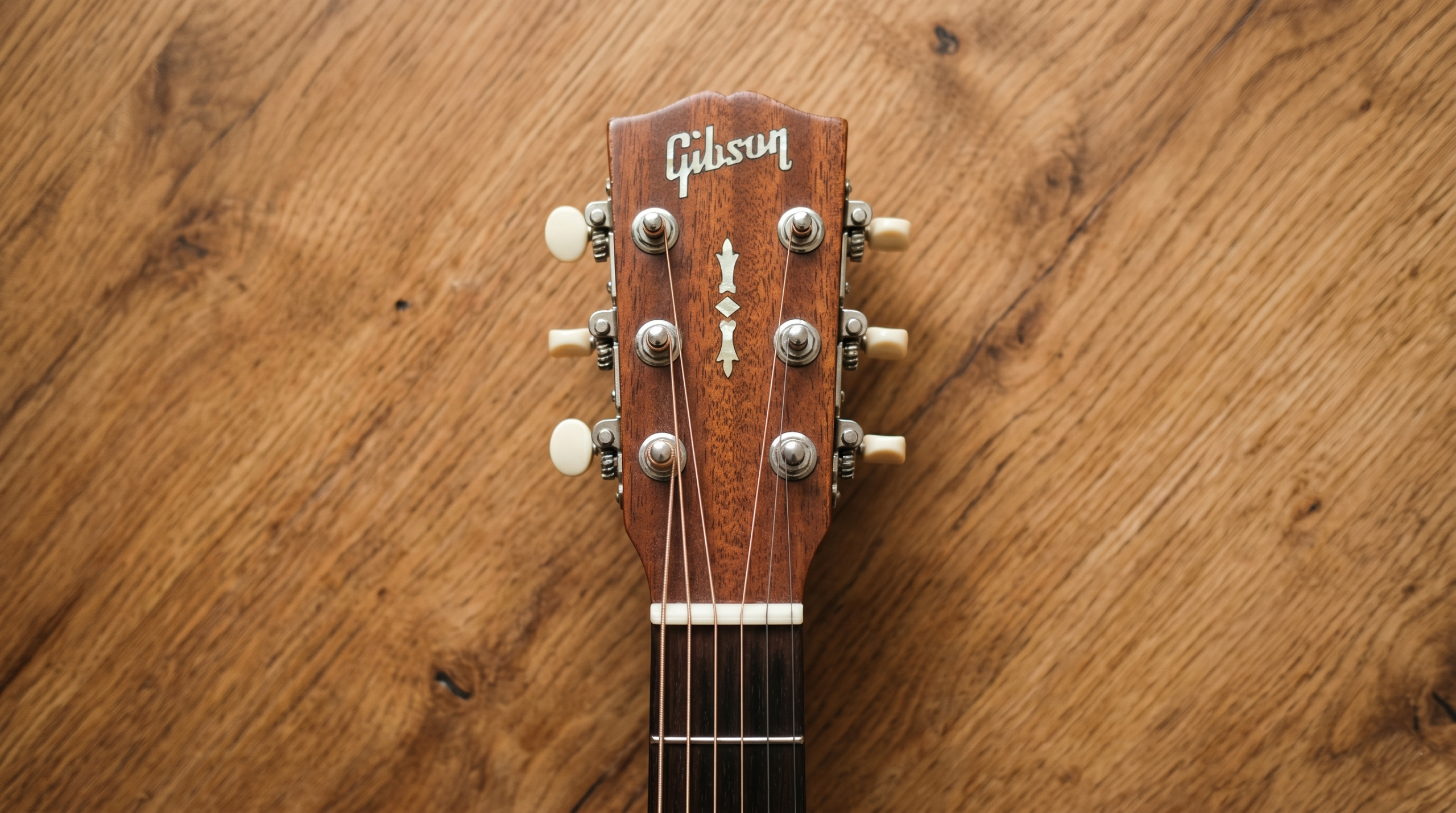
Standard tuning is a compromise. It’s designed to make the guitar as versatile as possible across as many musical contexts as possible, and it does that job well. But versatility comes at a cost. Certain voicings, intervals and resonances that are perfectly accessible on the guitar simply don’t exist in standard tuning. To find them, you have to retune.
Alternate tunings have been part of the guitar’s DNA since the beginning. Open G gave Keith Richards his riffs. DADGAD gave us Led Zeppelin’s Kashmir and an entire tradition of Celtic and fingerstyle guitar. New Standard Tuning was Robert Fripp’s attempt to redesign the instrument from scratch. Each tuning opens a different door: a set of sounds that standard tuning keeps firmly shut.
I was lucky enough to be taught by the late Eric Roche, who was one of the most highly regarded DADGAD players of his generation. As he told us, DADGAD was his standard tuning. He knew it so deeply that the idea of it being an “alternate” tuning had become meaningless. He also told us about going to Pierre Bensusan’s house in France for lessons, and Pierre’s insistence on moving past the “jangly everything in D” stage to actually playing in other keys in DADGAD. That transition, from novelty to fluency, is what alternate tunings are really about.
Here are nine worth your time. They’re in rough order of how much they ask you to relearn, so if you’ve never retuned before, start at the top.
The nine at a glance
| Tuning | Low to high | Strings changed | Good for |
|---|---|---|---|
| Drop D | D A D G B E | 1 | Riffs, and a low D under chords in D |
| DADGAD | D A D G A D | 3 | Fingerstyle, drones, Celtic |
| Open G | D G D G B D | 3 | Rhythm riffs, Delta-style slide |
| Open D | D A D F♯ A D | 4 | Slide, fingerstyle |
| Open E | E B E G♯ B E | 3 (all up) | Electric slide |
| Open C | C G C G C E | 4 | Fingerstyle, deep low drones |
| Dobro | G B D G B D | 3 | Lap-style resonator, bluegrass |
| All Fourths | E A D G C F | 2 | Consistent shapes everywhere |
| New Standard | C G D A E G | 5 | Wide range, rethinking the neck |
“Strings changed” isn’t the same as how much you’ll relearn. All Fourths moves only two strings and still changes every chord shape you know.
1. Drop D — DADGBE
The one you’ve probably already tried. Only the low E string moves, down a whole step to D, so everything above it is standard tuning and everything you know still works.
Most people use it for one-finger power chords on the bottom three strings, which is how it earned its place in rock and metal. Foo Fighters’ Everlong is in Drop D. The more interesting half is the low D under ordinary chords in the key of D: D, G and A all get a bass note that standard tuning can’t give them. It’s also the cheapest way to find out whether retuning is for you, because it costs you almost nothing.
2. DADGAD
The most approachable of the “real” alternate tunings, and a natural starting point. Three strings move: the 6th string down from E to D, the 2nd from B to A, and the 1st from E to D. The middle three strings stay where they are. The open strings give you a Dsus4 chord, which sounds instantly musical in the key of D (almost anything you play resonates) while being deep enough to spend years exploring.
Pierre Bensusan has spent a career proving that DADGAD is far more than a one-key novelty. Because the open chord is neither major nor minor, it sits happily under both, and the sus2 and sus4 voicings have a harp-like quality you won’t find anywhere else.
3. Open G — DGDGBD
Three strings go down a whole step: the 6th and 1st to D, and the 5th to G. Strum the open strings and you have a G major chord. Keith Richards takes the 6th string off altogether and plays Open G on five strings, which is where a lot of the Stones’ best-known riffs come from: one-finger chords and open strings, with the sound of the tuning doing the work.
It’s also a classic slide tuning, especially for Delta-style blues. One thing worth knowing if slide is your reason for trying it: the root is on the 5th and 3rd strings, and the top string is the 5th. For single-note slide melody, that makes the next tuning on this list easier to navigate.
4. Open D — DADF♯AD
If I were starting slide in an open tuning, this is the one I’d pick. Four strings go down: the 6th and 1st to D, the 2nd to A and the 3rd to F♯. The result is a D major chord with the root on both outside strings, so the note you’re usually aiming for on the top string is right under the slide, and a straight bar anywhere gives you a full six-string chord with the root in the bass.
It’s the same tuning as Open E, a whole step lower. Every shape and every lick is identical, and a capo at the 2nd fret gives you Open E without putting any extra tension on the neck. It’s just as good for fingerstyle: Richie Havens built much of his sound on it.
If you’re here for blues slide specifically, you might not need to retune at all. In standard tuning the ♭3 and ♭7 are already under the slide, at every fret. That’s what Slide Guitar in Standard Tuning is about.
5. Open E — EBEG♯BE
Tune up to an open E major chord and you have one of the most powerful-sounding tunings on the guitar. Open E is behind some of the most famous slide recordings ever made: Duane Allman used it, and Derek Trucks plays almost exclusively in it. It has a bright, resonant quality that suits slide and fingerpicking alike.
A word of caution: Open E raises three strings, the 5th and 4th by a whole step and the 3rd by a half step, and that puts extra tension on the neck. If you plan to use it regularly, a dedicated guitar or a setup check is worth considering. Or use Open D with a capo at the 2nd fret, which gives you exactly the same thing with less tension.
6. Open C — CGCGCE
One of the richest, most resonant tunings you can put on a guitar. Four strings move, three of them a long way down: the 6th string drops from E to C, the 5th from A to G and the 4th from D to C, while the 2nd goes up a half step from B to C. The low C gives bass notes a depth that standard tuning can’t approach, and the open voicings, particularly major 7 and add9 shapes, have a lush, enveloping quality. Nick Drake used variants of it.
The low C is a big drop, so the 6th string can feel slack and flappy on light strings. A slightly heavier bottom string sorts that out.
7. Dobro — GBDGBD
The standard tuning for square-neck resonator guitar, played flat on the lap with a steel bar, and the sound at the heart of bluegrass and a lot of country. It’s a G major chord like Open G, but with G rather than D as the lowest note, so the root is in the bass.
It’s built for the bar rather than the fingers, so it makes most sense on a lap-style instrument. Don’t try it on a regular guitar with regular strings: the 6th string goes up from E to G and the 5th from A to B, which is a lot of extra tension on strings that weren’t made for it.
8. All Fourths — EADGCF
Most guitarists don’t realise that standard tuning is almost all fourths. The exception is the B string, which sits a major third above the G rather than a fourth. All Fourths corrects that by raising the B string to C and the high E to F, which gives you a completely consistent layout across all six strings.
That matters in practice: any scale, chord or arpeggio pattern works identically on every string set, with no adjustment for the B string. Stanley Jordan is the best-known player to use it. The trade-off is that your existing chord shapes change, which is disorienting at first and liberating once you adjust. If it clicks, the Fourths Tuning trilogy covers it in full.
All Fourths Tuning Guide — PDF →
9. New Standard Tuning — CGDAEG
Robert Fripp’s redesign of the guitar from first principles. New Standard Tuning replaces the standard intervals with fifths, the same logic that underlies violin, viola and cello tuning, with a minor third between the top two strings. The result is a wider range than standard in both directions, a more consistent layout, and a completely different character.
NST is not for the faint-hearted. Every chord shape, scale pattern and arpeggio you know is gone, and you’re starting from scratch. But the payoff, a tuning designed around musical logic rather than historical accident, is significant for players willing to put in the time. Fripp used it as the foundation of his own playing and his Guitar Craft teaching for decades.
New Standard Tuning Guide — PDF →
How to actually get the most out of them
The temptation with any alternate tuning is to look up chord boxes and start memorising them. In my experience, that’s the quickest way to have the guitar back in standard tuning within the hour.
The approach that actually works, the one Eric Roche embodied and Pierre Bensusan insists on, is discovery. Find your own shapes rather than learning shapes someone else chose. What you find yourself becomes yours. What you memorise from a chart rarely sticks, and rarely sounds personal.
The guides above are built for that. Each one is a 16-page PDF with a handful of shapes to get you playing straight away, but most of the pages are full-neck chord and scale maps marked in intervals, so they work in any key. They show you where everything is and leave the choosing to you. There are blank diagrams at the back for writing down what you find.
Read more about the discovery approach →
All nine tunings, one download
Each guide covers getting into the tuning, what it’s good and bad at, the neck as a lookup table, 18 playable shapes, 12 full-neck chord maps, 8 scale maps and three phrases in tab. $2.99 each, or all nine together for $14.99.
See the tuning guides →