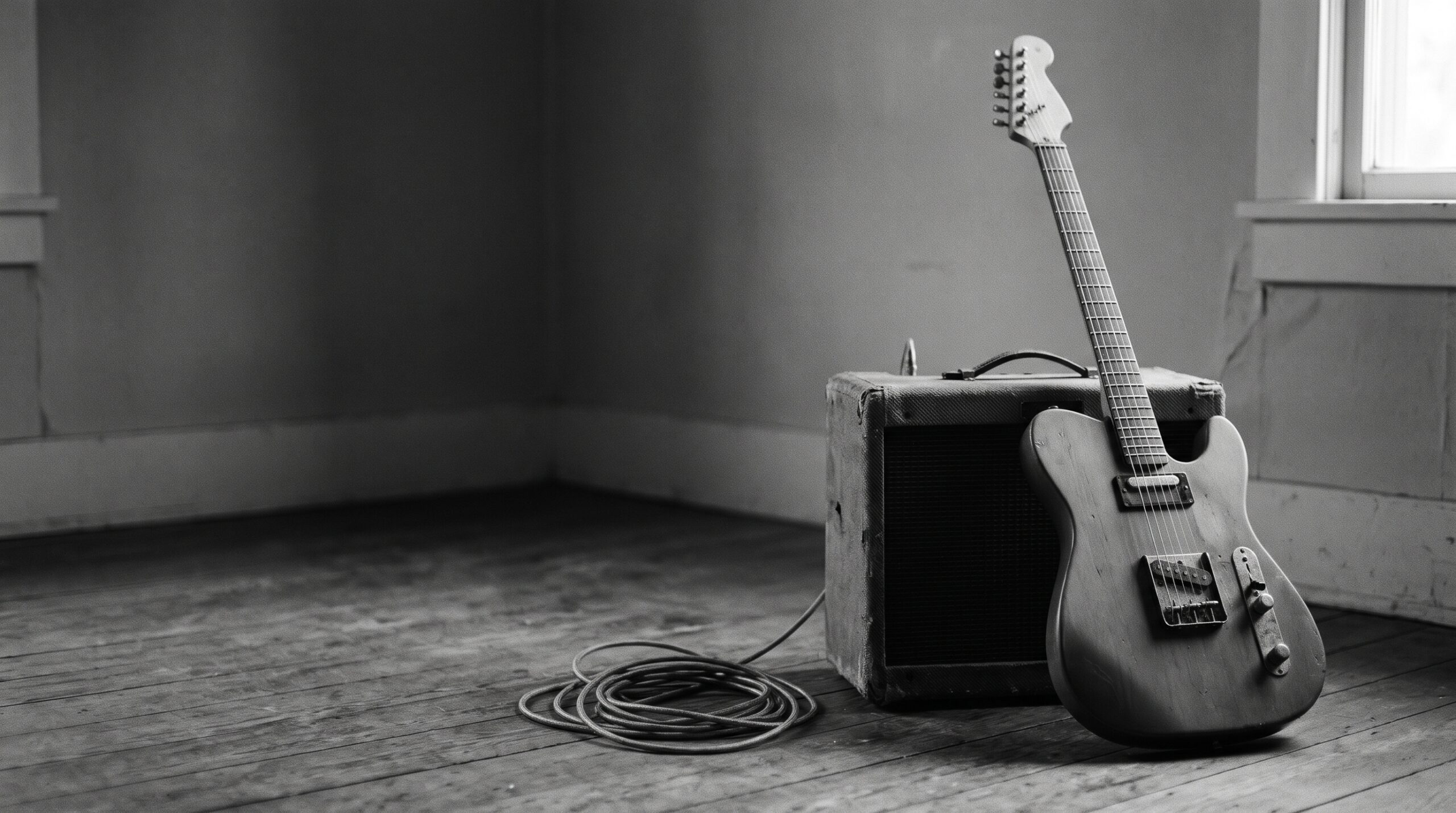
If every solo you play sounds like the last one, you probably don’t need another scale. Most guitarists who ask this already know plenty of notes. They’re playing them the same way every time: from the same box, starting on the same beat, ending on the same note, over every chord.
Your blues solos sound the same because you play one scale shape the same way over every chord, start your phrases in the same place, end them on the same note, fill every gap, and play licks instead of listening. Fix the first two and most of the sameness goes.
Here are the five reasons I hear most, and what to do about each one.
Reason 1You play the same box over every chord
The minor pentatonic box works over a whole 12-bar blues, which is why it’s the first thing everyone learns. It also sounds the same over A7, D7 and E7, because nothing in it changes when the chord does. The band moves and you don’t.
The fix isn’t a new scale. It’s three notes. Each chord in a blues has a 3rd that tells everyone which chord it is, and in A all three sit within a fret of the box you already play.
That one change does more for the sameness problem than anything else on this list. I built a free four-week plan around exactly these three notes.
Reason 2Every phrase starts on beat 1
Notes get all the attention, but rhythm is where a lot of the sameness comes from. If every phrase starts on the first beat of the bar, it doesn’t much matter which notes you choose: the solo has the same shape every time. Move the start. Begin a phrase on the “and” of 2, on beat 3, or just before the bar line, and the same lick sounds new.
Where most phrases start
Try starting here instead
Reason 3Every phrase ends on the root
Ending on A over an A blues is safe, and that’s the problem. It sounds finished every time, so the solo keeps stopping and restarting instead of going somewhere. Try ending phrases on the 3rd or the b7 of whatever chord is playing. Those notes sound like they want to go somewhere, which pulls the listener into your next phrase. I cover this in more detail in Part 2 of my blues improvisation practice routine.
Reason 4You never stop playing
A blues solo is closer to a conversation than a speech. If you fill every bar, nothing stands out, including your best ideas. Play two bars, leave two bars empty, and let the band answer. It feels uncomfortable at first. It’s also the oldest idea in the blues: call and response.
Reason 5You learned licks instead of listening
Licks are useful, but if your vocabulary comes from tab, you’ll play other people’s ideas in the same order every time. As I put it in How to Practice the Blues, a technique problem is rarely the real issue; a listening problem usually is. Spend some of your practice time just listening to the players you love. Notice where they start phrases, where they leave space and which notes they land on. That’s where your own variations come from.
A ten-minute fix
- Two minutes: play over an A blues using only the three 3rds, one per chord: C#, F# and G#.
- Three minutes: same backing track, but start every phrase somewhere other than beat 1.
- Three minutes: two bars on, two bars off. Don’t fill the gaps.
- Two minutes: play freely and record it. Listen back for the first four problems.
Do it for a week and compare the first recording with the last. The notes won’t have changed much. The solos will.
Fix reason 1 properly
My free plan takes those three notes through the whole 12-bar in A: where they are, how to find them anywhere on the neck, how to connect them and when to land them. One thing a day, ten to fifteen minutes.
Start Week 1 →No sign-up.