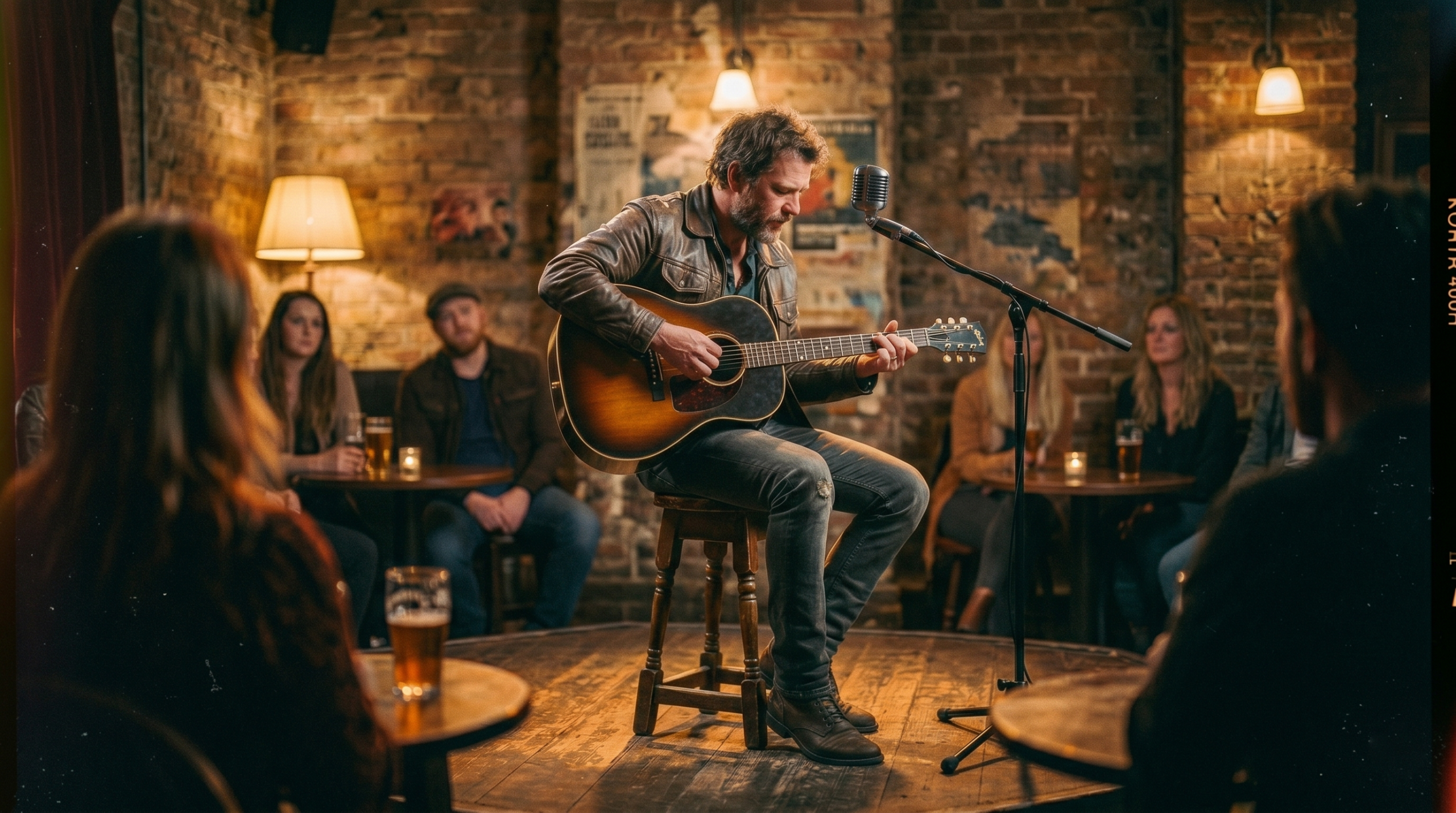
Most guitarists spend years playing alone. The bedroom, the spare room, the garage — wherever it is, it’s private, it’s safe, and the only audience is you. That’s fine. That’s how it starts for almost everyone.
But at some point the question changes from “how do I get better?” to “what am I getting better for?” And for a lot of players, the honest answer involves other people in the room.
Playing live is a different skill from playing guitar. That sounds obvious but most people don’t treat it that way — they assume that if they can play well enough, the rest will take care of itself. It doesn’t. Stage presence, nerves, gear logistics, setlist pacing — none of it is automatic, and all of it can be learned. Here’s how.
Start smaller than you think you need to
The instinct is to wait until you’re ready. The problem is you’re never ready — readiness is something that comes from doing it, not from preparing to do it.
Start at an open mic. One or two songs, a room full of people who are either waiting for their own turn or genuinely rooting for you. The stakes are as low as they get in live performance, and the experience is real. Busking is even lower stakes if you can stomach the indifference of strangers — and it builds a particular kind of focus that rehearsal rooms never will.
House parties, small café gigs, local events — all of these count. The venue doesn’t matter as much as the fact that someone other than you is in the room.
Know your setlist cold
Your first few gigs are not the place for new material. Play songs you know so thoroughly that you could play them half asleep, because that’s roughly the mental state nerves will put you in.
Three to five songs is enough for an open mic or a first slot. Mix the energy — one thing that moves, one thing that breathes, and if you’re doing covers, pick something the room will recognise. End on your strongest song. That’s what people remember.
Rehearse standing up, with the strap and the exact gear you’ll use on the night. Simulate the conditions as closely as you can. Record yourself and watch it back — you’ll notice things you never catch while playing.
Sort your gear before the night
Live shows are unforgiving on unprepared equipment. A dodgy cable, a dead battery in a pedal, a string that was overdue for changing — these things happen, and they happen at the worst possible moment.
Arrive early. Bring backups for anything that can fail — cables, strings, picks, batteries. Know your settings before you walk in. If there’s a soundcheck, use it properly: adjust your tone for the room, because what sounds good in your bedroom will often sound completely different through a PA in a live space.
Mark your pedal settings with tape if you use effects. Small things like this are the difference between a gig that flows and one that derails before the first song is over.
Stage presence is simpler than it looks
You don’t need to be Angus Young. You need to look like you’re somewhere you want to be.
That’s it. Move a little. Make eye contact. Say something between songs — even a single sentence acknowledges the audience and makes you human rather than a pair of hands attached to a guitar. If you’re enjoying yourself, it reads. If you’re terrified and holding it together, that reads too — but it reads as commitment, which audiences respect.
Mistakes will happen. How you handle them is what people remember, not the mistakes themselves. Keep going.
The nerves are useful
Stage fright is adrenaline. It sharpens your focus if you let it — the problem is when you fight it, because then it turns into paralysis.
The best preparation for nerves is knowing your material so well that your hands can play it while your brain is partially elsewhere. Deep breathing before you go on is not a cliché — it genuinely works. Play something familiar as a warm-up in the green room or the car park, whatever’s available. It settles the system.
And the more you do it, the less dramatic it becomes. Not because the nerves go away, but because you accumulate evidence that you can handle them.
After the gig
Record your sets where you can and watch them back. You’ll cringe, which is useful — cringing means you’ve identified something to fix. Ask for honest feedback from people who will give it.
Book the next gig while the first one is still fresh. The gap between performances is where the fear rebuilds — keep it short.
The jump from bedroom to stage is less about skill level than most players assume. It’s about deciding to do it, finding the smallest possible first step, and taking it before you talk yourself out of it.
Your playing will improve faster in one open mic than in a month of bedroom practice. The audience teaches you things no amount of solo rehearsal ever will.