Absolute pitch — the ability to name any note upon hearing it and produce notes at will without a reference — is one of the most debated abilities in music. Some say it’s purely innate, something you’re born with or not. Others sell programmes claiming to teach it completely to anyone. Neither position is quite right.
What’s less discussed is the middle ground: that there is a way into absolute pitch, and that way begins with understanding how the brain actually stores and retrieves musical notes — and how to work with that process rather than against it.
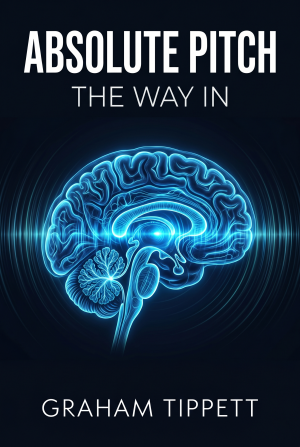
That’s what this book is about.
Absolute Pitch: The Way In doesn’t promise to hand you perfect pitch overnight. What it does is show you the correct way to use your memory and access the part of your brain where musical notes are stored — a simple, practical method for internalising the 12 notes of music that most musicians never discover because nobody shows them where to look.
Work through it seriously and your ear will sharpen in ways that affect everything: your ability to identify notes and intervals by ear, your creativity, your confidence as a musician, and your relationship with music itself.
What’s in the book:
- Why most approaches to learning absolute pitch fail — and what they’re missing
- How the brain stores musical notes and how to access that storage deliberately
- A simple, step-by-step method for internalising all 12 notes of music
- Why this approach works for all instruments and singers, not just guitarists
- A genuine way into absolute pitch — not a shortcut, but a door that most musicians don’t know exists
Who it’s for:
Any musician who wants a sharper, more reliable ear. Guitarists, singers, pianists — the method works across instruments. Players who’ve tried ear training before and found it abstract or disconnected from real musical application. Anyone curious about absolute pitch who wants an honest, practical approach rather than either “you can’t learn it” or “learn it in 30 days.”
Available on: Amazon Kindle
Also worth exploring:
If ear training is where you want to go next, Simple Chord Tone Soloing System takes a related approach to hearing harmony — training your ear to identify and target chord tones while you solo rather than relying purely on scale patterns.